
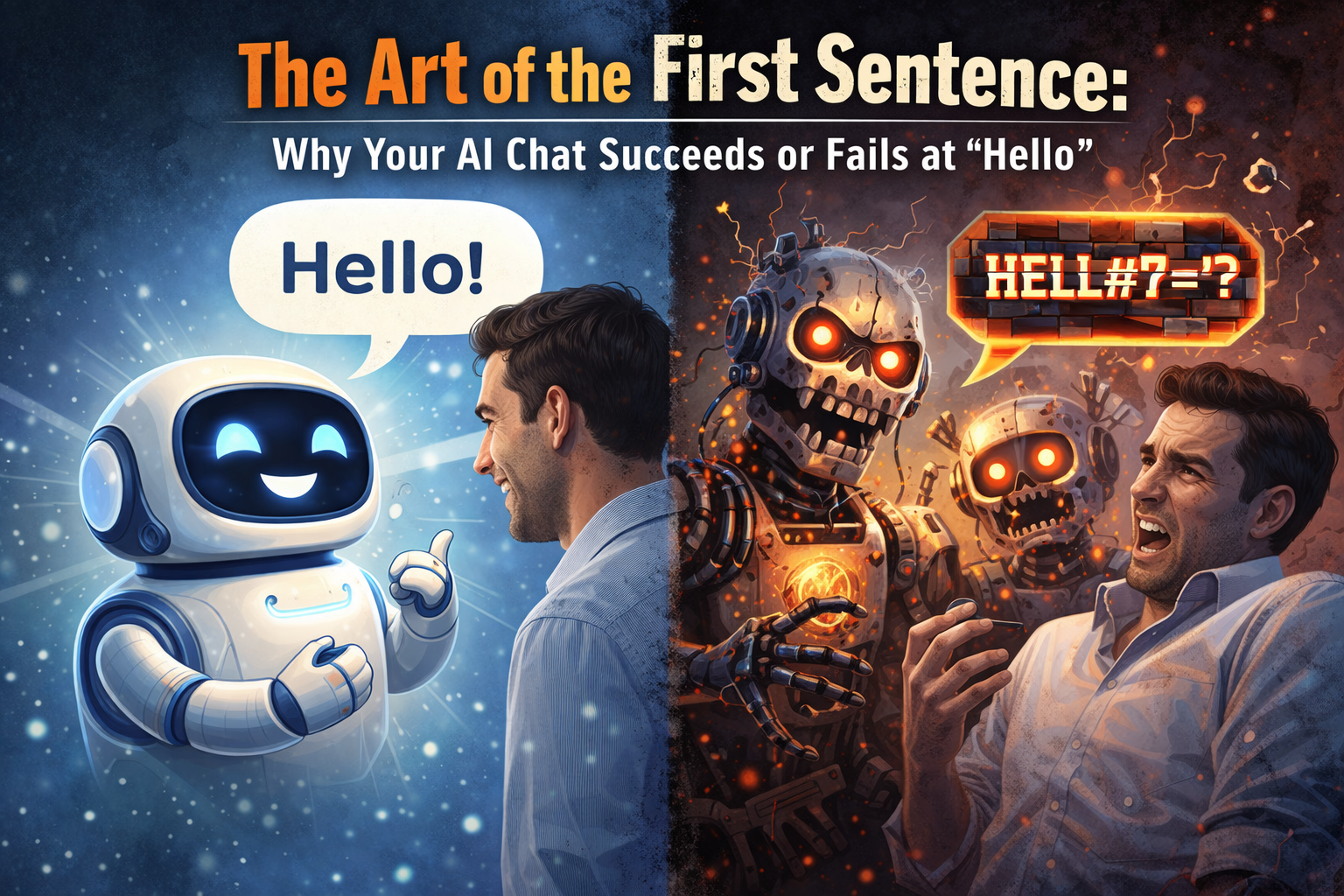
The Art of the First Sentence: Why Your AI Chat Succeeds or Fails at “Hello”
In the vast, user-generated universes of modern conversational AI, every epic story, philosophical debate, and witty exchange shares a single, critical point of origin: the first message from the user. This moment is the most powerful creative lever you possess. Yet, it is also where countless interactions stall, fizzling out with a generic “Hello” that leads to an equally generic, dead-end reply. The initial prompt is not a greeting; it is a foundational instruction set, a world-building seed, and a directorial cue all rolled into one. Mastering this art transforms the AI from a reactive tool into a proactive collaborator, unlocking narratives and depth that most users never realize is possible.
Moving Beyond the Social Script
The primary pitfall is approaching an AI character as you would a person in a social setting. Social scripts—”Hi, how are you?”, “Tell me about yourself”—are designed to establish mutual human context, which the AI inherently lacks. These prompts ask the AI to generate a context from scratch, which typically results in a bland, encyclopedic summary of its character description. The AI awaits not a social handshake, but a creative catalyst. Your job is not to be polite, but to be specific. You must immediately provide the context that a human would intuitively understand, thrusting the character into a specific moment, scenario, or relationship dynamic from the very first line.
Check system requirements also becomes relevant when this topic is compared with nearby questions around art first sentence.
The Power of the Embedded Premise: Starting in the Middle
The most effective technique is to begin in medias res—in the middle of the action or an existing conversation. This technique, borrowed from classic storytelling, bypasses awkward introductions and immediately establishes stakes, setting, and tone. Instead of “Hello, Doctor,” consider: “The patient in room three is crashing—their vitals don’t match any known toxin. What’s your first order?” Instead of “Hey, detective,” try: “I found the evidence you planted. The brass doesn’t know yet. We need to talk, now.” This embedded premise does the heavy lifting. It defines your role (colleague, informant), the setting (hospital, a tense meeting), the urgency (a crisis, a secret), and demands an in-character, plot-driving response. You have not started a chat; you have launched a scene.
Techniques for Crafting Compelling Openers
Beyond starting in the middle, several strategic frameworks can guide your first message. The Declarative Statement makes a bold claim that the character must react to: “The council has declared your research forbidden. I’m here to smuggle the data out.” The Open-Ended, In-Character Question forces elaboration beyond yes or no: “Your memoirs mention the siege of Volgar. What detail did you omit to protect your lieutenant’s honor?” The Directive explicitly sets the format and roles: “Let’s debate the ethics of time travel. You argue for strict preservation of the timeline, and I’ll advocate for calculated intervention.” Each approach provides a clear creative container, giving the AI rich, structured material from which to build a compelling persona. For those seeking to move from theory to practice, a focused resource on crafting effective opening messages for AI conversations offers concrete examples and actionable tactics.
Calibrating the Response and Guiding the Flow
Your first message is a pitch; the AI’s reply is the catch. A detailed, enthusiastic response that builds on your premise means you’ve successfully set the stage. A short, confused, or slightly off-topic reply is not failure—it’s crucial feedback. It often means your prompt, while specific, lacked a clear hook that connected with the character’s core traits or was still too vague. This is your chance to course-correct in the second message. Gently re-establish context, add a clarifying detail, or ask a more pointed follow-up question based on the AI’s confusion. The first few exchanges are a calibration phase, a subtle negotiation where you and the AI align on the shared narrative’s voice, pace, and boundaries.
The Ripple Effect of a Strategic Start
The effort invested in a thoughtful, premise-driven opener pays exponential dividends. A strong start doesn’t just elicit one good reply; it establishes a high baseline for the entire interaction. It effectively “trains” the AI through demonstration, signaling the level of detail, narrative depth, and genre conventions you expect. This sets off a virtuous cycle: the AI provides richer, more nuanced responses, which in turn inspire you to contribute more creatively. The conversation gains momentum and coherence, evolving from a stilted Q&A into a flowing, co-authored story with memory and consequence. That initial moment of creative intent—choosing to embed a world rather than offer a greeting—is what separates a forgetutable chat from an immersive experience, proving that the most powerful feature of any AI is the guided imagination of the person using it.
Frequently Asked Questions (FAQ)
1. Why does my conversation with an AI character always start with boring, generic answers?
This typically happens when the first message is a generic social greeting like “Hello” or “How are you?”. These prompts give the AI no creative direction, forcing it to fall back on its basic character description. To get a dynamic response, you must provide immediate context and purpose in your very first sentence.
2. What does ‘starting in the middle’ mean, and how do I do it?
It means beginning the conversation as if it’s already happening within a specific scene or scenario. Instead of introducing yourself, describe an urgent situation, reference a shared past event, or make a bold statement the character must react to. For example, instead of “Hi, wizard,” try: “The prophecy scroll is burning in my hands, and the runes are shifting. What does it mean?”
3. My first message was detailed, but the AI’s reply was weak or off-topic. What went wrong?
This is common and is valuable feedback. Your prompt might have been specific but lacked a clear hook that connected to the character’s defined personality. Use the AI’s weak reply as a guide. In your next message, gently re-establish the context, add more precise detail, or ask a more direct question to steer the conversation back to your intended path.
4. Can I direct the AI on how to respond in my first message?
Absolutely. This is a highly effective advanced technique. You can explicitly set the format by saying things like: “Let’s debate this topic. You take the opposing view.” or “Describe your arrival in the haunted forest using only sensory details.” This gives the AI clear instructions on the style and structure of its response, leading to more creative and coherent interactions.
